

Can I Pour Clr In My Toilet To Clean Syphon Holes
Take a peek inside your toilet tank. Is it filled with limescale or rust? Chances are, your toilet's water tank is filthy compared to the residuum of the fixture.
This frequently-overlooked component helps go along the mechanics of your commode out of site. Unfortunately, the enclosed design makes it a magnet for limescale and difficult water stains.
The mess accumulates in the tank, leading to foul odors, extreme discoloration, and more. If non taken care of, a filthy tank can even cause flushing bug.
So that begs the question: "Can CLR be used in toilet tank components?"
Can CLR Be Used in Toilet Tank?
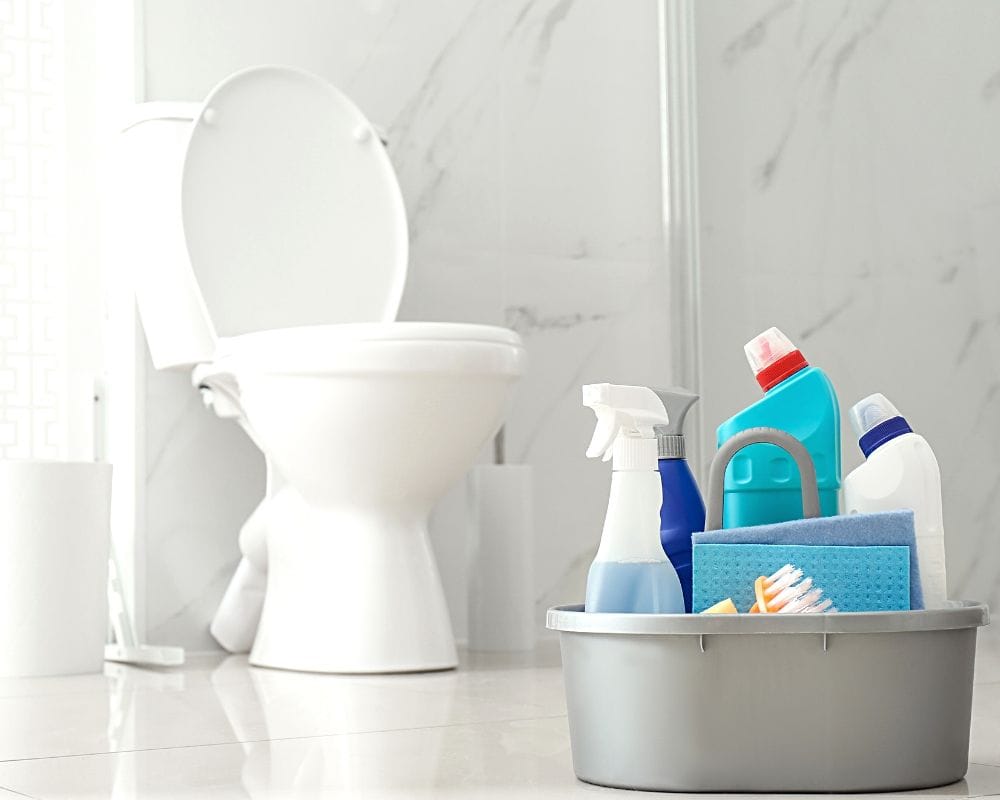
CLR is an effective product for cleaning the toilet tank. Use CLR to the sides and lesser of the toilet tank. Spray CLR directly onto rust stains and mineral deposits. Scrub stubborn stains with a castor or sponge. Permit the CLR solution soak for virtually 2 minutes before rinsing and flushing.
Why Practise Toilet Tanks Go So Dirty?
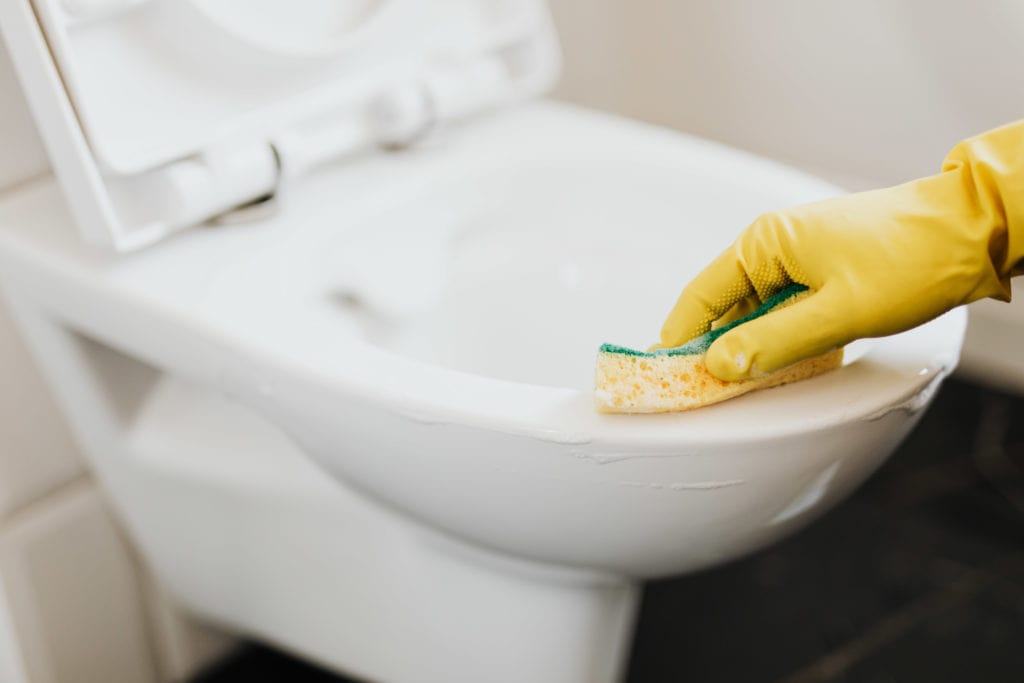
Your toilet tank isn't but a place to gear up things! It'southward ane of the nearly important parts of your commode. This component houses all the flushing mechanics and prepares water for your flush.
Most homeowners ignore the tank. But, plumbers recommend that yous clean the tank out at to the lowest degree twice a year. It might seem pointless, but keeping your tank in expert condition can prolong the life of your toilet!
You see, tanks interact with h2o more than the bowl itself. Every single time you affluent, h2o from the tank rushes through the jets effectually the rim of the bowl to drive waste matter abroad. But what happens later on the affluent? Well, the tank automatically fills upward once more!
Beyond those few seconds of flushing, the tank is constantly filled. Ever wonder why the tank is always dirty and smelly? H2o is to arraign! The constant exposure to h2o leads to some unsightly bug.
Mineral Buildup
The well-nigh pressing issue you'll have to deal with in the tank is calcium and lime buildup. Over fourth dimension, the tank volition develop a thick chalky substance. You've probably seen it before on your sink faucet or showerhead.
Calcium buildup is the result of dissolved minerals in your water hardening. A vast bulk of American households have difficult water, so information technology's a mutual problem that many have to bargain with.
The issue with limescale is that it quickly affects the performance of your toilet! Information technology tin can clog up jet holes. Not only that, just the limescale can develop on the many flushing components, rendering them useless.
Mold and Algae Growth
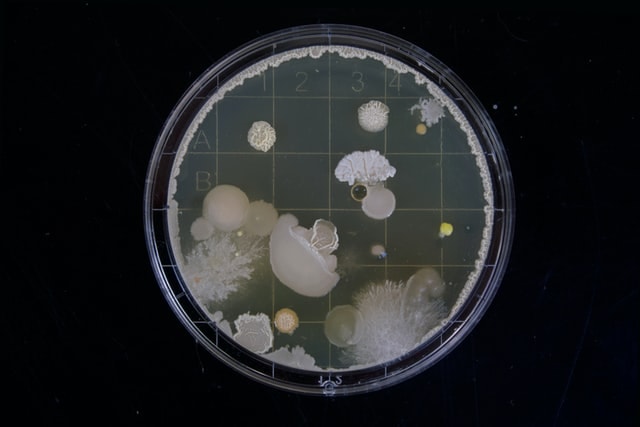
I bet mold is something you didn't recall you'd have to bargain with in your bathroom! Mold can form in your toilet tank. This results in a noticeable olfactory property while also creating a low-cal brownish or green tinge to the water.
The truth is that the toilet tank is the perfect convenance ground for mold and leaner. Information technology'south constantly moist in that enclosed environment. Not simply that, but the toilet provides mold with a reliable food source. If you have hard water, mold tin can thrive!
Of course, having mold in your toilet tank is non good. It can degrade your commode and lead to a host of potential health problems.
Rust
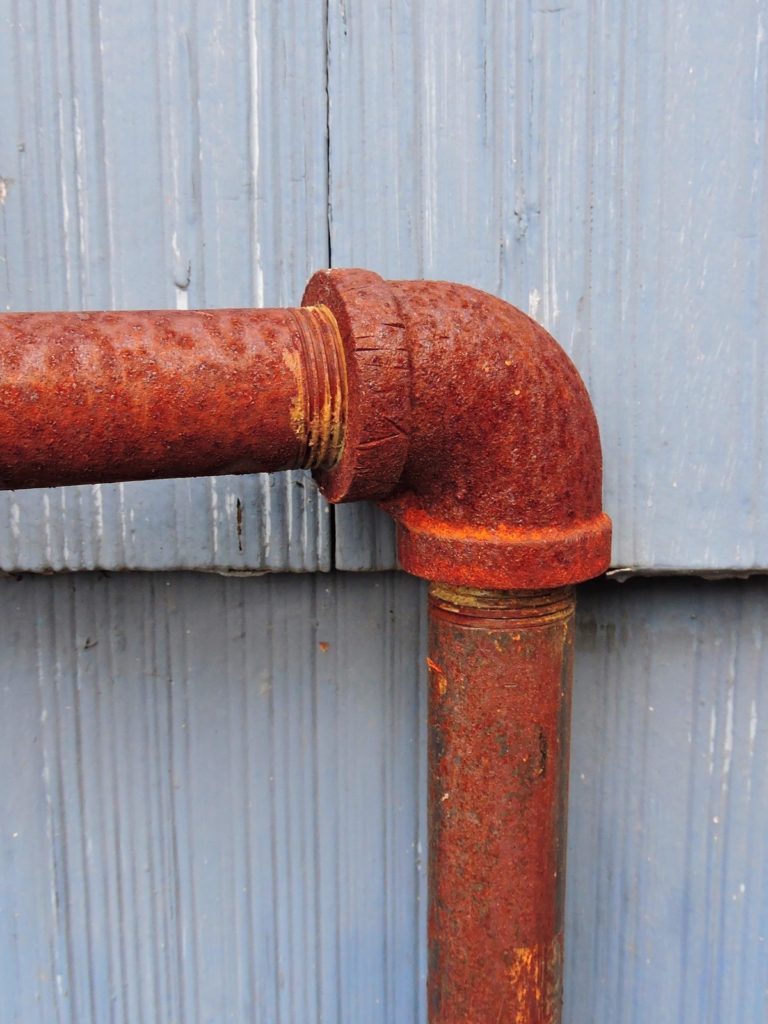
Finally, there's the event of rust. Rust tin can affect your toilet tank in a couple of different ways. If y'all already have rust in your pipes, the tank will let you know. Most tanks aren't glazed, allowing rust-stained water to seep into the porcelain.
This leads to some serious discoloration in your fixture. Information technology may even leech into the water supply, creating an ugly tint to your flushing water.
That's not all. Difficult water can cause components in the tank to rust upwards, too. Everything from the flapper valve to the chain connecting the flushing lever is at risk for damage. The corrosive nature of rust will slowly damage your toilet. Information technology causes leaks, poor operation, and several other bug.
How CLR Can Help
CLR, as well known as Calcium, Lime, and Rust Remover, is a fantastic production that tin tackle a broad range of issues in your toilet tank. It's a powerful cleaner that every homeowner should accept in their arsenal. What makes it so special?
Well, CLR is an acrid-based product that dissolves hardened rust and calcium buildup. At that place are several different acids in the formula. These include:
- Gluconic acrid
- Citric acrid
- Lactic acid
- Glycolic acrid
- Sulfamic acid
CLR has some other ingredients as well. Ingredients like water and surfactants make the product safe and effective.
The gluconic, glycolic, and sulfamic acids are the key players here. Gluconic acid dissolves mineral buildup caused by difficult h2o. Meanwhile, glycolic acid penetrates the porcelain to remove stains. Finally, the sulfamic acid removes rust from the metallic in your tank.
Tin CLR Be Used in Toilet Tank?
We're happy to say that CLR is completely prophylactic to use. In fact, many plumbers and home experts recommend information technology!
The product is stronger than your average cleaner and targets common toilet problems.
How to Clean Your Toilet Tank with CLR
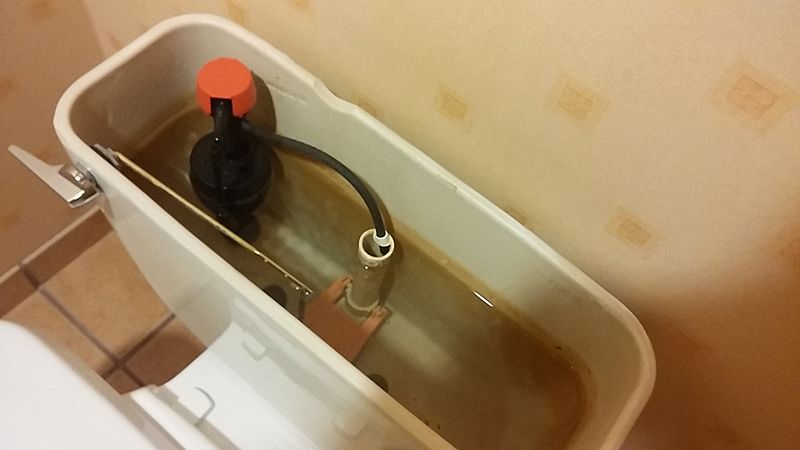
Using CLR in your toilet tank is a cakewalk! It's an effective production that tin keep your tank in good shape without all of the heavy scrubbing.
To make clean your tank, you're going to need:
- Protective prophylactic gloves
- Lightly abrasive scrub brush
- Sponge or rag
- Confront mask and eye protection
You'll likewise need some CLR to go the job done! Here'southward a large bottle of CLR that you tin use with many fixtures around your house. If you want something a bit easier to manage, you tin also go this spray bottle of CLR.
Stride 1: Turn Off Water Supply
The first thing you lot'll need to practice is plough off the water supply to your toilet. To take total advantage of the power of CLR, y'all'll need to clean the tank when it's empty.
Locate the supply line. It's usually side by side to the toilet on the wall. Give it a turn to the correct until information technology's fully closed. So, affluent the toilet to remove water from the tank. Yous may have to practise this a couple of times to become everything out.
Remove the tank lid to see within. If you were successful, the tank should not fill up upwardly with water once more. Cheque out this video if you're having a difficult time locating your supply line.
Pace 2: Remove Surface Crud
Next, it's time to remove any grime that's accumulated on the sides and bottom of the tank. Think of this as a preliminary cleaning earlier you lot apply the CLR. You lot want the CLR to penetrate. Removing any surface sludge can improve efficiency.
Using a scrubbing brush and your sponge, give the inside of the tank a good wipe downward!
Stride 3: Employ CLR
Now it's time to apply the CLR cleaner! This product does accept a strong smell. Use a mask and some eye protection to stay safe.
Spray the CLR along the sides and bottom of the tank. Apply a liberal glaze and wait for about 2 minutes.
Don't forget to utilise some CLR to whatever rusted metallic components in the tank, too.
Step four: Scrub the Tank
Depending on how bad your toilet tank is, you might accept to practise some scrubbing. After waiting two minutes, apply your castor and sponge to scrub the tank.
Be gentle around the flushing components. Use your sponge to remove whatever rust and limescale that could affect the performance of your toilet.
Step 5: Turn Your Water Supply On and Rinse
CLR doesn't need long to piece of work its magic. After 2 minutes, the tank will exist ready for rinsing. Turn the toilet's water supply back on and let it fill. If you cleaned to a higher place the waterline, utilise a spray bottle with clean h2o to remove any backlog CLR cleaner.
Once the tank has filled, just flush the toilet! The CLR will launder away and y'all should accept a clean tank!
Using CLR for Toilet Tank Maintenance
Equally we mentioned earlier, your toilet tank needs a proficient cleaning at to the lowest degree twice a yr.
To minimize issues with hard water and rusting, you can employ CLR more frequently. But, you lot don't have to do deep cleaning!
You lot can dilute CLR with water. A 50/fifty mix is all you lot demand. Fill the tank with this diluted mixture and let information technology soak before flushing. Doing this in between cleanings will keep your toilet tank in good condition!
Determination
CLR is a smashing cleaning product for toilets. Information technology tin can go rid of mineral buildup, rusting, and other h2o issues with ease. The acids in CLR quickly dissolve hard water stains to go on your tank in good shape.
Check out the industrial-force CLR spray or enhanced-formula CLR solution. Both work great with the toilet! If you have whatsoever questions about cleaning your toilet tank, exit them in the comments beneath!
If rust or limescale accept taken over your toilet tank, use CLR to restore its finish and amend efficiency!
CLR in the Toilet Tank FAQ

Source: https://swankyden.com/can-clr-used-toilet-tank/
Posted by: burnsbountly.blogspot.com
0 Response to "Can I Pour Clr In My Toilet To Clean Syphon Holes"
Post a Comment